
Road Trip Ready: A Quick Maritime Tire Safety Checklist
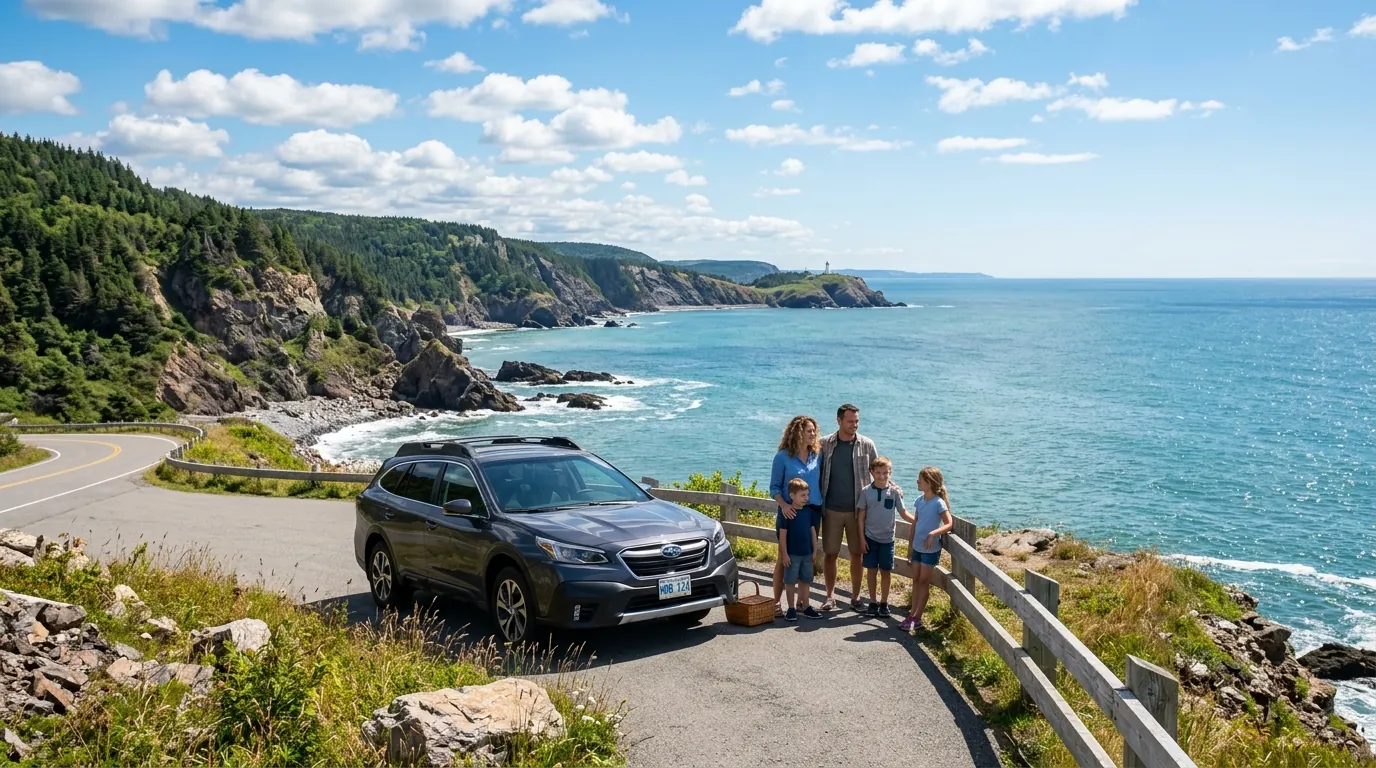
You can pack the cooler and still forget the one thing that touches the road. Before a Maritime road trip, give the tires ten honest minutes. It is boring. It also prevents most of the roadside calls we hear about in July and August.
1. Pressure — including the spare
Use the door sticker, not the max PSI moulded on the tire. Check all four when cold, then the spare. A dead spare turns a simple puncture into a wrecked weekend.
Heading out in a heat wave? Read how heat damages tires so you know why soft tires fail on hot pavement.
2. Tread depth (toonie test)
Stick a toonie in the main groove.
- Silver outer band still covered? You have usable depth left
- Only the gold centre showing? Start shopping — wet roads and highway speeds are a poor mix with bald tires
Heavy rain on coastal highways is normal here. You want tread that can still move water.
3. Quick visual once-over
Look for nails, cuts, uneven shoulder wear, and cracked sidewalls. Uneven wear often means you need an alignment more than a new set — though sometimes you need both.
4. Torque if you recently swapped wheels
After a seasonal swap, re-torque lug nuts after the first 50–100 km. Any ATK shop can do that quickly — find a location.
Towing a trailer this trip?
Trailer tires play by different rules. Read trailer tire maintenance before you hitch up.
Ready for a pre-trip check or a new set? Book an appointment or shop tires online.
Common questions
How long does a pre-trip check take?
Pressure, tread, and a walk-around: about ten minutes at home. In the shop we can go deeper if something looks off.
Do I need winter tires for a September Cabot Trail run?
Usually not in early September. Watch overnight lows — once daily highs sit near 7°C, start planning the winter swap (7°C rule).
Can you check my spare if I stop in?
Yes. Bring the vehicle in and ask. Spares get ignored until the worst possible moment.