
Trailer Tire Maintenance: Safe Towing for Late Summer Campers
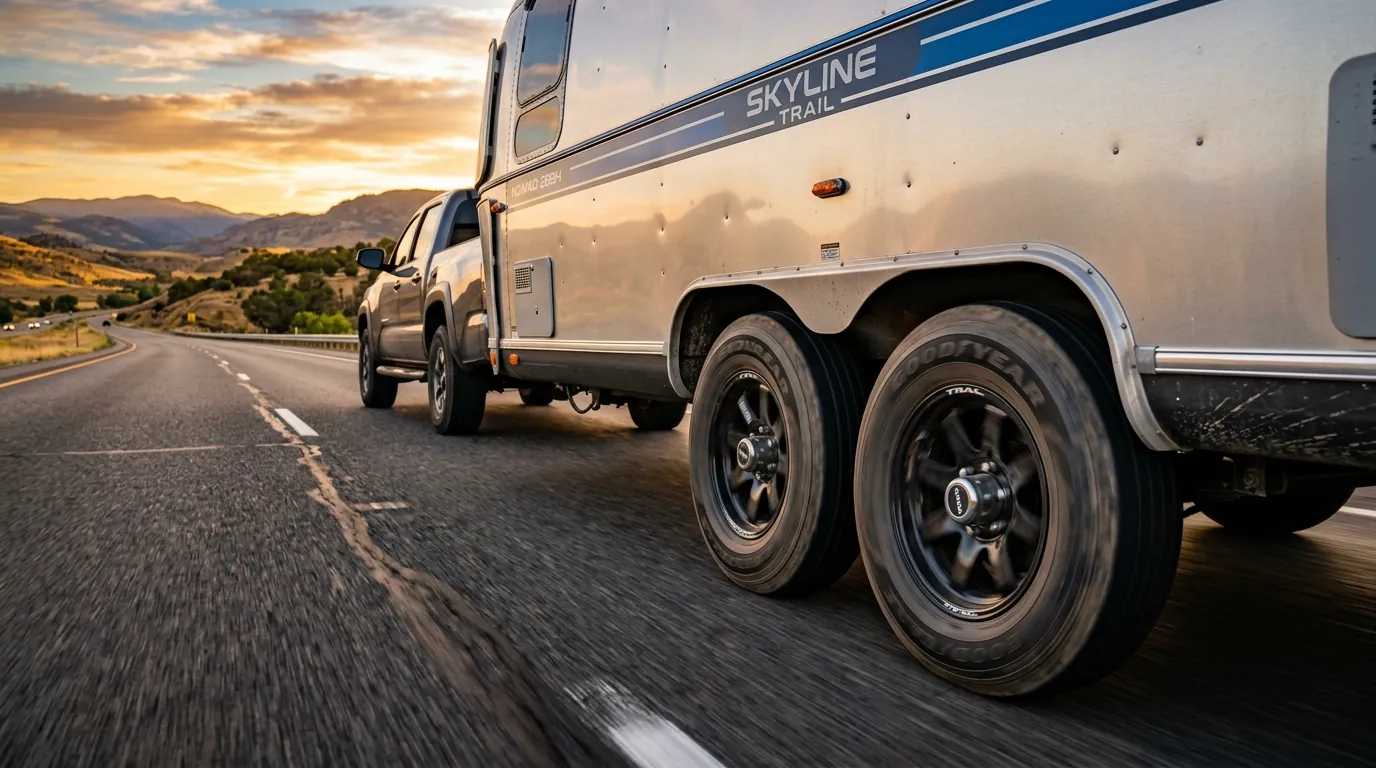
Trailer tires fail in ways car tires usually do not. The trailer sits for months, then suddenly runs loaded at highway speed in August heat. Flat spots, UV cracks, and soft pressure show up fast.
If you tow to PEI or a campground on a long weekend, check the trailer tires before you check the cooler.
Use ST tires when the trailer calls for them
Most trailers want ST (Special Trailer) tires — stiffer sidewalls for load and sway. A passenger tire that “fits the rim” is not automatically the right tire.
Not sure what is on there now? Look at the sidewall markings, or roll into any ATK location and ask.
Inflate to the trailer tire’s cold max (usually)
Unlike your truck, many trailer tires are meant to run at the maximum cold PSI printed on the sidewall. Soft trailer tires flex, heat up, and come apart. Underinflation is still the story behind most trailer blowouts we hear about.
Confirm with the trailer manufacturer placard when there is one. When in doubt, ask before you guess.
Age matters more than mileage
A trailer tire can look new with barely any kilometres and still be done at five or six years. Rubber ages in sunlight. Date codes matter.
Covers help in storage. So does getting the tires off bare dirt. Before a long haul, pair this with the truck-side road trip checklist.
Heat and load stack the risk
Hot days plus a heavy camper is rough on ST tires that were soft to start. Same physics as summer heat on vehicle tires, just with less forgiveness.
Need trailer rubber or a pressure check before you tow out? Book a visit or call the shop closest to you.
Common questions
Can I put light-truck tires on my trailer?
Only if the trailer manufacturer allows it and the load rating is correct. Many trailers specifically need ST construction.
How often should I replace trailer tires?
Often every 5–6 years even with tread left. Inspect every season you tow.
Do trailer tires need balancing like truck tires?
Sometimes, not always the same way. Ask when we mount them — depends on the tire and axle setup.