How Heat Damages Your Tires (and How to Prevent Summer Blowouts)
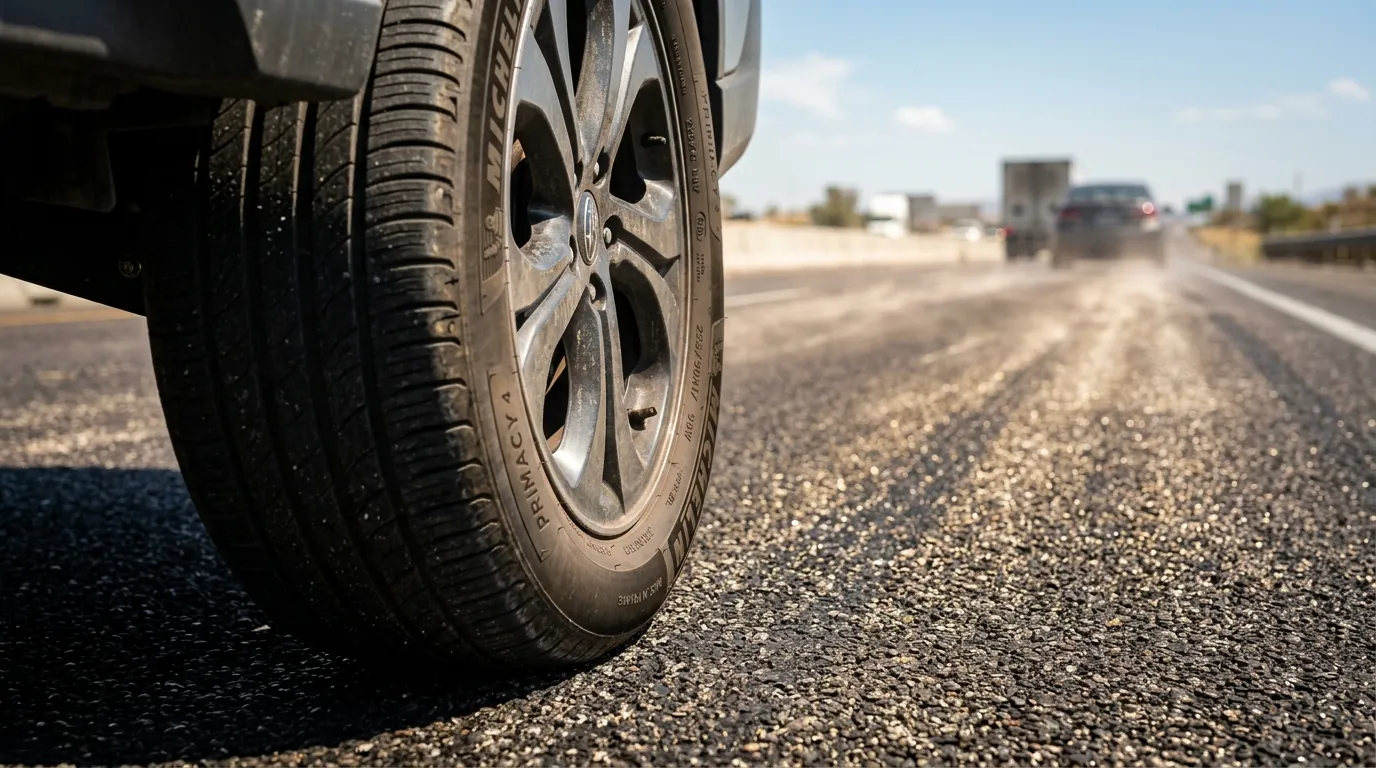
July on the 2 between Moncton and Saint John will cook a soft tire. You feel the road get sticky, the car wanders a bit, and if that tire was already low — heat builds faster than people expect.
Blowouts rarely come out of nowhere. Usually the tire was underinflated, overloaded, or already damaged.
Why heat is hard on tires
Rubber and belts do not love high temperature. Friction from the road adds more heat. Soft sidewalls flex more, and flex creates even more heat. That loop is how tread separation starts.
Air pressure also climbs as the day warms. Rough rule: about 1 PSI for every 5°C change. So a tire that looked fine in a cool morning bay can be riding high by afternoon — or, if it was low to start, still be flexing too much once you are at speed.
What actually prevents most summer failures
Check pressure cold. Morning, before you drive, or after the car has sat a few hours. Do not bleed air out of a hot tire after a highway run and call it fixed — it will drop when it cools.
Walk the car once a week in summer:
- Sidewall cracks or dry rot
- Bulges (those are not “maybe later” problems)
- Nails or screws in the tread
- Wear on one edge only — often an alignment issue
Stay inside the load rating on the door sticker. Cottage gear, bikes, a packed trunk — it adds up.
Before a long weekend trip
If you are heading for Fundy or the Island, spend ten minutes with our road-trip tire checklist. And yes, look at the spare. Flat spares are embarrassing and unsafe.
Need a pressure check, patch, or new rubber before a trip? Book a bay or shop tires. Our store list covers Moncton, Oromocto, Saint John, and dealer partners nearby.
Common questions
Should I lower my tire pressure in the heat?
No. Set cold pressure to the door-jamb spec. Hot pressure naturally runs higher; that is normal.
Can I drive on a bulged sidewall to the shop?
Best not. A bulge means internal damage. Call us and ask — sometimes a tow is the cheaper outcome.
Do new tires fix heat problems by themselves?
New tires help if the old ones were cooked or worn out. They will not save you if you keep running them 8 PSI low.