
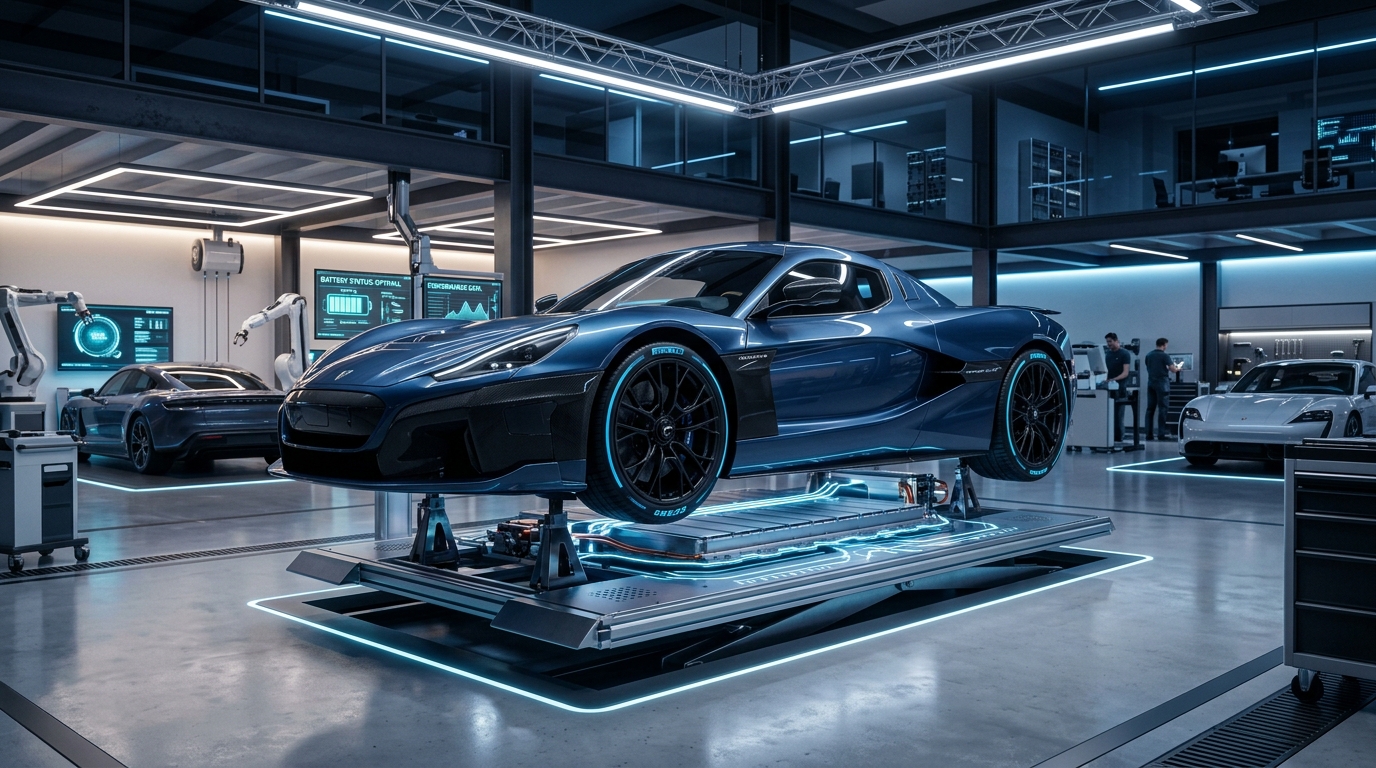
The Silent Destroyer: Instant Torque vs. Rubber Tread
If you drive a Tesla Model 3, Ford Mustang Mach-E, or Hyundai Ioniq 5 across the Maritimes, you may have noticed your tires wearing out significantly faster than on your previous gas-powered vehicle. Independent studies show EV tires wear out 20% to 30% faster on average.
In a conventional combustion engine, power builds gradually through transmission gears. In an electric vehicle, 100% of maximum electric torque is available instantly at 0 RPM. Every green light and highway merge sends massive shear friction through the tire contact patch.
The 1,000-Pound Battery Penalty
A typical midsize electric SUV weighs between 4,500 and 5,500 lbs—roughly 800 to 1,200 lbs heavier than an equivalent gas crossover. This constant downward gravitational force compresses the tire shoulder during cornering.
Without specialized EV-rated tires (marked with HL or EV designations), standard passenger tires flex excessively, leading to overheating, accelerated center tread wear, and reduced driving range.
Acoustic Foam & Low Rolling Resistance Chemistry
Because electric motors are virtually silent, road and tire noise become the loudest sounds in the cabin. Premium EV tires incorporate a sound-absorbing polyurethane foam ring glued inside the tire carcass, reducing interior road rumble by up to 9 decibels.
Furthermore, specialized high-silica rubber compounds decrease rolling resistance, extending your single-charge driving range by 15 to 30 kilometers.