Why Liquid Brine Is 3X More Aggressive Than Rock Salt
Provincial road maintenance crews in Atlantic Canada increasingly rely on liquid salt brine (calcium and magnesium chloride solutions). While brine prevents snow bonding to asphalt effectively, it atomizes behind vehicle tires into a corrosive mist that coats every exposed component of your undercarriage.
Unlike rock salt which bounces off, liquid brine clings to brake calipers, tie-rod threads, sway bar links, and electrical harnesses.
The Number One Failure: Seized Brake Caliper Slide Pins
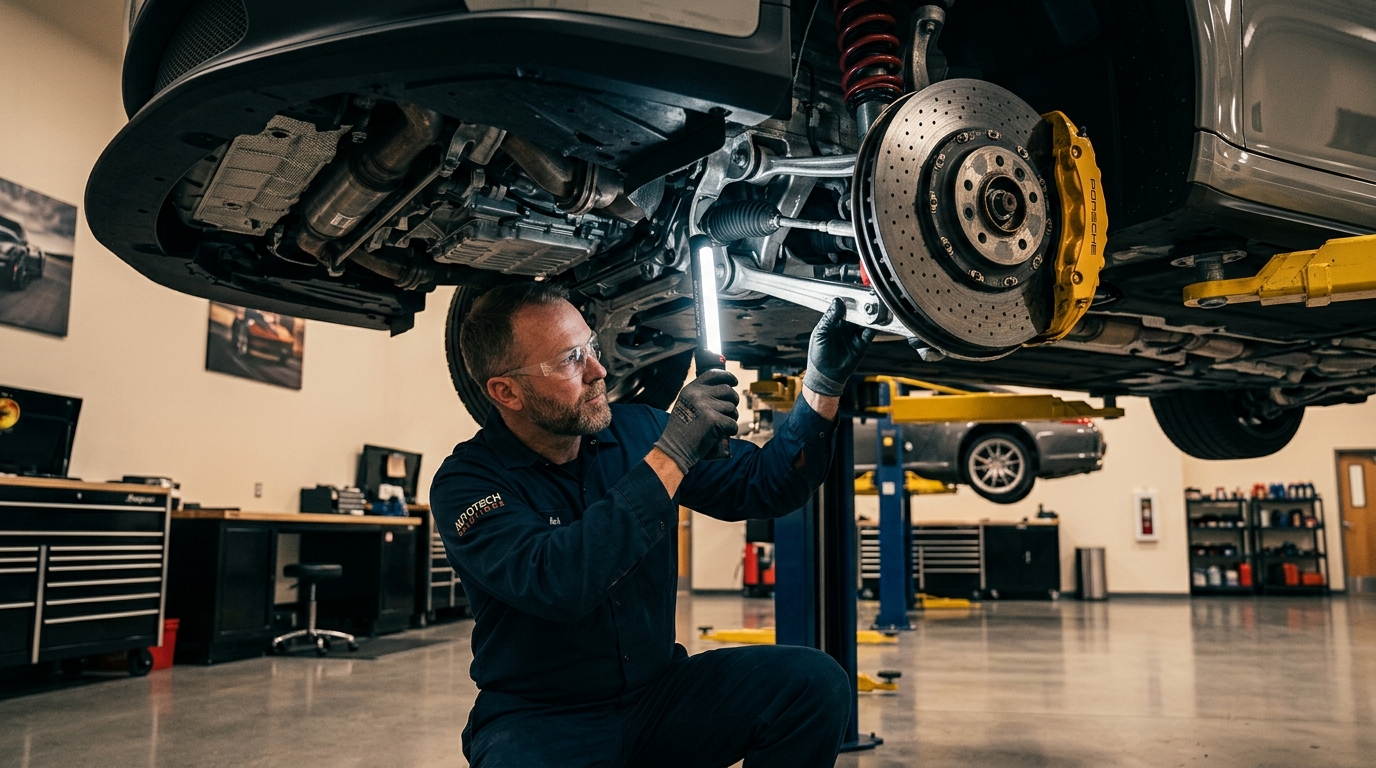
The most common brake issue we see every spring across our Moncton, Fredericton, and Saint John shops is seized caliper slide pins. When road salt breaches the rubber dust boots, the grease dries out and the pin locks in place.
This forces one brake pad to drag permanently against the rotor, causing severe brake vibration, overheating, and cutting rotor lifespan in half.